One More Session Won't Save You: The Recovery Gamble Aussie Punters Keep Falling For

The Story We Tell Ourselves at 11pm
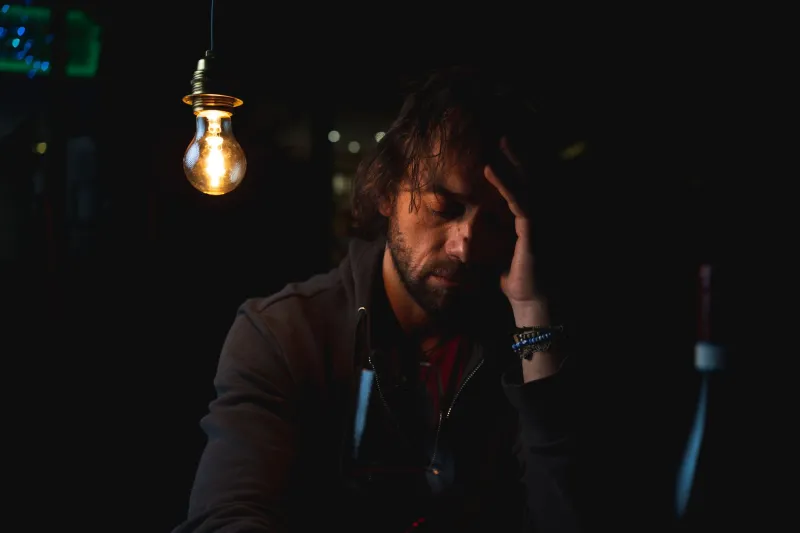
You've had a rough night. Maybe you dropped a couple hundred at the pokies, or your sports multi collapsed in the last leg — again. And somewhere between the drive home and lying in bed staring at the ceiling, the story starts forming: Next time, I'll get it back. I just need one good session.
It's a compelling narrative. Australians love a comeback. From cricket to footy to the races, we're culturally wired to admire the person who cops a flogging and comes back swinging. That spirit is genuinely worth celebrating in sport. In gambling? It's quietly devastating.
The 'redemption gamble' — the idea that a future session can undo the damage of a past one — is one of the most psychologically seductive and financially dangerous traps in the punter's playbook.
Why the Comeback Story Feels So Real
When we lose money gambling, the brain doesn't just register a financial hit. It registers something closer to a personal failure — an incomplete story. Psychologists call this the 'Zeigarnik effect': our minds hold onto unfinished business far more intensely than resolved outcomes. A loss feels unresolved. The next session feels like the resolution.
Add to that the way Australian gambling culture frames luck — as something that 'evens out', that 'turns', that you're 'due' for after a run of bad results — and you've got a perfect storm. The idea that variance owes you something is mathematically false, but emotionally, it feels completely logical.
Researchers at the Australian Gambling Research Centre have documented how loss-motivated return visits are among the most common patterns in problem gambling presentations. The punter isn't returning because they enjoy the game. They're returning because the last session left the story open-ended, and their brain is desperately trying to close it.
The Actual Maths of a 'Recovery Session'
Here's the uncomfortable truth: the pokies, the tables, the sportsbook — none of them know you lost last week. There is no memory in the machine. There is no cosmic ledger being balanced.
If you're playing a pokie with a 90% return-to-player rate, your expected return on every dollar you feed in is 90 cents — regardless of whether you won big yesterday or lost your shirt last Saturday. The house edge doesn't pause for your comeback arc.
For perspective: to recover a $300 loss through a session with a 10% house edge, you'd need to run significantly above expected variance just to break even — and every dollar you pump in to 'get back' is exposed to that same edge. You're not playing catch-up. You're digging a second hole next to the first one.
Sports betting complicates this further. Yes, there's skill involved in some forms of punting. But the emotional state of a punter trying to recover losses is one of the worst conditions for sharp decision-making. You're more likely to take longer odds, chase parlays, or bet on markets you'd normally avoid — all because the emotional pressure of the loss is overriding your analytical brain.
Real Scenarios, Real Costs
Consider this kind of scenario — it plays out constantly across Australia.
A bloke loses $250 on a Friday night at his local. It stings, but he tells himself he'll be more careful next time. By Sunday arvo, the itch is unbearable. He goes back 'just to get even'. He loses another $180 before walking out. Now he's down $430 and the story is even more unresolved than before. The next weekend, he's back again.
Or a woman who plays online pokies after the kids go to bed. She has a bad Tuesday — drops $120 she hadn't planned to spend. By Wednesday she's already thinking about Thursday's session, telling herself she'll be smarter, she'll set a tighter limit, she'll stop when she's ahead. The problem isn't discipline. The problem is that 'getting back what she lost' has become the goal — and that goal has no logical endpoint.
These aren't cautionary tales from extreme cases. They're the quiet, ordinary patterns that sit just below the surface for a huge number of Australian gamblers.
Why Fresh Starts Actually Beat Recovery Sessions
Here's what the data suggests: a punter who takes a deliberate break after a loss — even just 48 hours — and then returns with a genuinely fresh budget and a genuinely fresh mindset, performs better across time than one who returns immediately to 'recover'.
The reason is partly mathematical (you're not chasing a specific number) and partly psychological (you're not gambling angry, desperate, or emotionally compromised).
A 'fresh start' session treats each gambling experience as its own event, with its own budget and its own emotional baseline. A 'recovery session' carries the weight of the previous loss into every single decision you make.
If you're going to gamble, the healthiest version of it treats each session as complete in itself — win or lose, the story ends when you walk out the door.
Breaking the Comeback Cycle
Recognising the redemption gamble is the first step. Here are a few honest prompts worth sitting with:
- Is the reason I'm going back today different from 'I want to get even'? If not, you're in recovery mode, not recreational mode.
- Am I using money I hadn't originally budgeted for this? If the answer is yes, you're no longer playing with your gambling budget — you're raiding other parts of your life.
- Would I be going back if I'd broken even last time? If the loss is the primary motivation, the comeback story is already writing itself — and you know how it usually ends.
There's no shame in having fallen for this pattern. It's built into how human brains process unresolved outcomes. But naming it for what it is — a psychological trap, not a strategy — is how you start making different choices.
If the cycle feels genuinely hard to break, it's worth reaching out to the Gambling Help Hotline on 1800 858 858, or visiting gamblinghelponline.org.au. No judgement, no pressure — just a conversation that might change the next chapter of the story.