Too Proud to Ask: Why Aussie Gamblers Suffer Alone and What It Takes to Break That Silence
The Weight Nobody Talks About
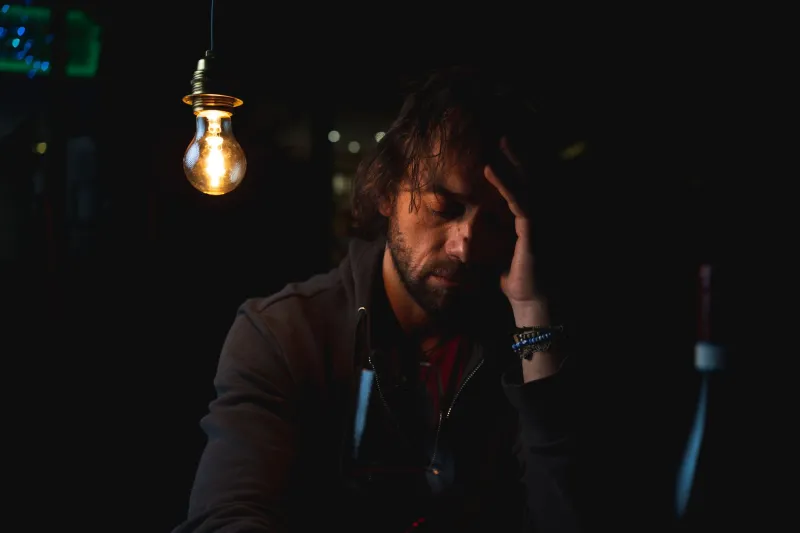
There's a particular kind of loneliness that comes with a gambling problem in Australia. It's not the loneliness of isolation — most people experiencing it are surrounded by family, mates, colleagues. It's the loneliness of carrying something you can't put down, in a room full of people you can't tell.
The shame is its own kind of trap. And for a lot of Aussie punters, it keeps them stuck far longer than the gambling itself.
We talk a lot in this country about mental health — the conversation has genuinely shifted over the past decade. But gambling harm sits in a strange space. It doesn't get the same sympathy as anxiety or depression. There's an implicit judgment attached to it: You did this to yourself. You had a choice. That judgment, real or imagined, is enough to keep most people silent for months, sometimes years, past the point where they needed help.
The Cultural Backdrop
Understanding why Australians struggle to ask for help with gambling requires understanding a bit about who we are culturally.
Mateship is a genuine Australian value — the idea that you show up for your mates, that loyalty matters, that you're there when it counts. But there's a shadow side to that culture: the expectation that you handle your own problems, that you don't burden others, that admitting struggle is somehow a failure of character.
For men especially — and men represent a significant proportion of problem gamblers in Australia — this plays out in a very specific way. Research from the Australian Institute of Family Studies consistently shows that men are less likely to seek help for gambling problems than women, and more likely to present later, when the financial and relational damage is already severe. The stoic, self-sufficient archetype is deeply embedded, and it costs people dearly.
But women aren't immune to this either. The shame women often carry is different in flavour — more tied to the idea of being a responsible parent, partner, or provider — but equally paralysing. The fear of what it would mean for their relationships, their custody arrangements, their standing in the community, keeps many women quiet far too long.
What Shame Actually Does to Decision-Making
It's worth being clear that shame isn't just an uncomfortable emotion — it actively impairs the ability to seek help. This is well-documented in the psychological literature.
When we feel shame, we tend to withdraw, hide, and minimise. We tell ourselves the problem isn't as bad as it seems. We make promises to ourselves that we'll fix it quietly, without involving anyone else. We manage the symptoms — covering debts, hiding bank statements, making excuses for absences — rather than addressing the cause.
This is sometimes called 'shame management', and it's extraordinarily effective at keeping people stuck. Every week spent managing the shame is a week the underlying problem grows. And the larger the problem grows, the more shame there is to manage — it becomes a self-reinforcing cycle that's very hard to exit alone.
A counsellor working in the gambling support space once described it this way: by the time most people call for help, they've been thinking about making that call for six to twelve months. The barrier isn't awareness — most people know something is wrong long before they act on it. The barrier is the story they're telling themselves about what asking for help means about them.
The Conversations That Could Change Everything
One of the most consistent findings in gambling harm research is that early intervention — a conversation before the problem reaches crisis point — dramatically improves outcomes. Not because a conversation magically solves anything, but because it breaks the isolation, introduces accountability, and opens a door to professional support.
So what does that conversation actually look like in an Australian context?
For someone reaching out to a mate they're worried about, the instinct is often to confront — to say I know what you've been doing or you've got a problem. But that approach almost always triggers defensiveness and withdrawal. A more effective entry point sounds something like:
'Hey, I've noticed you seem stressed lately. I'm not here to get into your business, but if something's going on, I'm not going anywhere.'
No accusation. No diagnosis. Just presence and availability. That's often enough to crack the door open.
For someone who's trying to find the words to reach out themselves, the hardest part is usually the first sentence. It doesn't have to be a full confession. It can be as simple as:
'I think I've been gambling more than I should. I'm not sure what to do about it.'
That sentence — just that — is enough to start a conversation with a GP, a counsellor, or a support line. You don't need to have the full story ready. You don't need to know exactly how bad it is. You just need to say the first sentence out loud to someone.
What Professional Help Actually Looks Like
A lot of Aussies have a mental image of 'getting help' that involves sitting in a circle with strangers, or committing to some kind of intensive program, or having your life turned upside down. The reality is considerably more low-key.
The Gambling Help Hotline (1800 858 858) is free, confidential, and available 24 hours a day. You can call and just talk — there's no obligation to sign up for anything. Calls are answered by trained counsellors who are specifically there for this.
Gambling Help Online (gamblinghelponline.org.au) offers webchat and email options for people who aren't ready to speak on the phone — a lower barrier still.
For people who want face-to-face support, most states have free counselling services through community health organisations. A GP can also make a referral, and conversations with your GP are strictly confidential.
None of these pathways require you to have hit rock bottom. They're not reserved for the worst cases. They're for anyone who's starting to feel like gambling is costing them more than they're comfortable with.
The Thing About Asking for Help
Here's the thing that doesn't get said enough: asking for help with a gambling problem is not a sign of weakness. It's a sign that you've correctly identified a problem that is specifically designed — by very clever people, with significant financial resources — to be hard to stop on your own.
The pokies, the betting apps, the casino floor — they're engineered to exploit psychological vulnerabilities. They have entire teams dedicated to keeping you playing. Asking for help isn't an admission of personal failure. It's a rational response to a system that has a significant structural advantage over you.
The silence doesn't protect anyone. It just gives the problem more time to grow.
If something in this article resonated with you — or if you're reading this and thinking of someone else — the number is 1800 858 858. It's free. It's confidential. And it's there whenever you're ready.