Does Changing Venues Actually Change Your Luck? What the Science Says About Pokies Spot-Hopping
You know the feeling. You've fed a machine at your local RSL for the better part of an hour, walked away with nothing, and suddenly the idea hits you: maybe the pub two streets over is running hot tonight. So you grab your keys, make the drive, and settle in somewhere new — convinced that a fresh venue means a fresh start.
It's one of the most common rituals in Australian pokies culture, and if you've done it, you're in very good company. But here's the uncomfortable truth your mate probably won't tell you over a beer: the data doesn't back it up. Not even a little.
Let's break down why venue-hopping feels so logical, why your brain is basically wired to encourage it, and what's actually happening inside those machines regardless of which postcode they're sitting in.
The Ritual That Feels Like Strategy
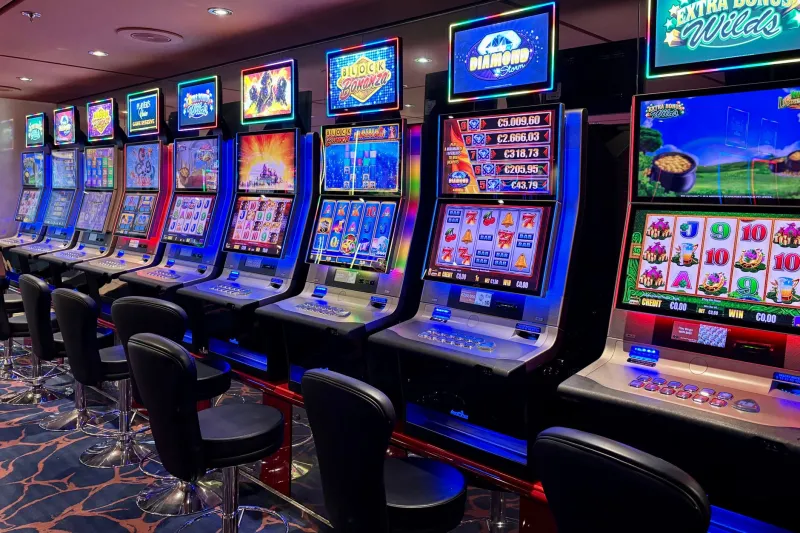
Australia has one of the highest concentrations of poker machines in the world. With tens of thousands of machines spread across pubs, clubs, and RSLs from Cairns to Hobart, Aussie players have no shortage of venues to bounce between. And bounce they do.
Talk to regular pokies players and you'll hear all kinds of venue-hopping logic. Some believe certain pubs have "looser" machines. Others think a venue that hasn't paid out recently is "due" for a big win. A few reckon the machines near the bar pay better than the ones in the corner. These aren't fringe theories — they're genuinely held beliefs that shape how people spend their evenings and their money.
The problem is that every single one of those beliefs misunderstands how pokies actually work.
What's Actually Inside the Machine
Every poker machine in Australia — whether it's bolted to the floor of a Parramatta club or tucked into a coastal Queensland pub — operates using a Random Number Generator, or RNG. This is a piece of software that produces thousands of random number sequences every second, even when nobody's playing.
When you hit the spin button, the machine captures the current number sequence and translates it into the symbols you see on the reels. The outcome is determined at that exact millisecond — not by how long the machine has been sitting idle, not by how many coins have gone in before yours, and absolutely not by which suburb the venue happens to be in.
Each spin is statistically independent. The machine has no memory of previous results. It doesn't know it hasn't paid out in two hours. It doesn't "owe" anyone anything.
This means the moment you walk through the doors of a new venue, sit down at a different machine, and press spin — you are starting from exactly the same statistical position as you were at the last place. The geography has changed. The odds haven't.
Why Our Brains Keep Lying to Us
So if venue-hopping achieves nothing mathematically, why does it feel so effective? The answer lies in some deeply ingrained quirks of human psychology.
The Gambler's Fallacy is the big one. This is the brain's stubborn insistence that past random events influence future random outcomes. It's why people think a machine that hasn't paid in a while is "due" — and by extension, why a venue that seems cold must mean the machines are all dried up. In reality, randomness doesn't balance itself out over short timeframes. A machine can go cold for days and then pay twice in an hour. Or not. There's no pattern to find.
Confirmation Bias does the rest of the heavy lifting. When you move venues and win, your brain files that under "venue-hopping works." When you move venues and lose, that memory tends to fade faster, get rationalised away, or simply not register as strongly. Over time, you build up a mental highlight reel of successful venue swaps and conveniently forget the dozen times it made no difference.
The Illusion of Control is also worth mentioning. Pokies are passive — you press a button and wait. That's it. For people who like feeling in control of outcomes (which is most of us), the act of doing something — driving to a new venue, choosing a different machine, changing up the routine — satisfies a psychological need even when it has zero practical impact. It transforms a passive experience into something that feels like active decision-making.
What the Gambling Data Actually Shows
Australian state and territory regulators require pokies to meet strict Return to Player (RTP) requirements. In most jurisdictions, machines must return a minimum percentage of wagers over time — typically somewhere between 85% and 90% depending on the state.
Here's the key word: over time. We're talking millions of spins. The RTP figure doesn't tell you anything meaningful about what's going to happen in your next hundred spins, or even your next thousand. It's a long-run statistical average that plays out across an enormous sample size — far larger than any individual player will ever experience in a single session, or even across a lifetime of play.
And crucially, those RTP settings are programmed into the machine's software. They don't vary by venue. A machine set to 87% RTP operates at 87% whether it's in a Crown-affiliated venue in Melbourne or a small club in regional New South Wales. The venue's carpet colour, the friendliness of the staff, and the quality of the chicken parma on the menu have precisely zero influence on your statistical outcomes at the machine.
The Hidden Cost of the Hop
Beyond the mathematical futility, venue-hopping carries a practical cost that's easy to overlook. When you pack up and head somewhere new, you're spending time and often money — petrol, parking, maybe another round of drinks once you arrive. You're also resetting your session in a way that can make it harder to track how much you've actually spent across the evening.
For players trying to stick to a budget, moving venues can actually work against responsible gambling habits. It creates a psychological "fresh start" feeling that makes it easier to justify spending more, even if you've already hit your limit at the previous venue.
So What Should You Do Instead?
None of this means pokies aren't fun — they absolutely can be, when played within your means. But understanding the mechanics helps you make smarter decisions.
If you've hit your session limit at a venue, the right move is to call it a night — not to drive somewhere else and start again. If you're having a run of bad luck at a particular machine, the stats don't improve by relocating. And if a venue feels lucky, it's worth asking yourself whether that feeling is based on anything real, or whether it's just your brain doing what brains do: finding patterns in chaos.
The machines don't know where they are. They don't know who you are. Every spin is a fresh roll of the dice, regardless of the postcode.
Next time the urge to venue-hop strikes, maybe just call it a night, grab some chips on the way home, and save the petrol money. Your wallet will quietly thank you for it.