Chips Down, Masks Off: What a Night at the Casino Tells You About Your Mates
Australian mateship is one of those things we love to talk about — the loyalty, the looking out for each other, the unspoken code that says a good mate's got your back no matter what. But here's the thing: most of the situations we use to test that code are pretty low-stakes. A rough footy season. A bad breakup. A long drive with no service.
Then you walk into a casino together, and suddenly the stakes are very, very real.
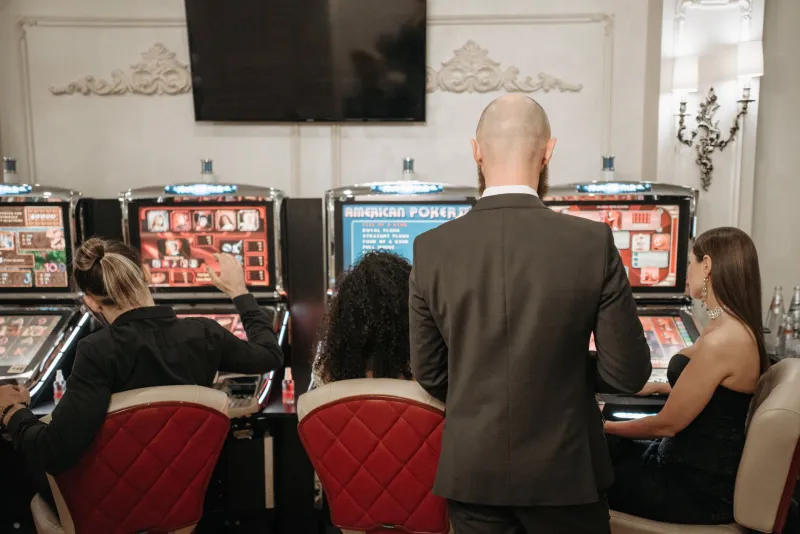
There's something about the combination of flashing lights, real money, and the emotional rollercoaster of wins and losses that cuts through the social performance most of us put on every day. A night on the casino floor — whether it's the pokies at your local or a proper sit-down at a Crown table — has a way of revealing the actual architecture of a friendship. And sometimes, what you see isn't pretty.
The First Hour Is a Honeymoon
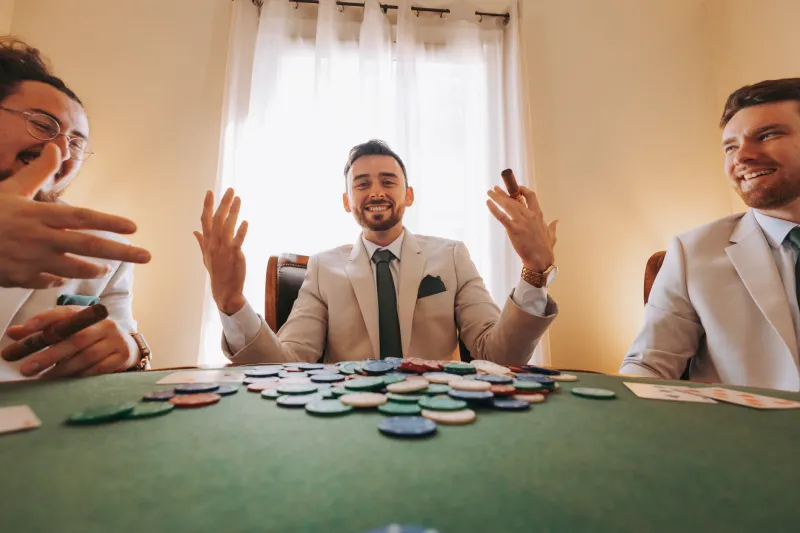
Every group arrives with good energy. There's banter, there's optimism, someone's already declared they're going to "smash it tonight." Everyone's in a good mood because nobody's lost anything yet.
This is the easy part. Mates are generous with their enthusiasm, quick to shout rounds, happy to wander over and watch each other play. It costs nothing to be a great mate when the night is still full of possibility.
The real test doesn't start until someone hits a rough patch.
When the Money Starts Running Out
Watch what happens when one person in the group burns through their budget early. Do their mates notice? Does anyone check in, or do they quietly drift toward the machines that are treating them better?
This is the first genuine fork in the road. A mate who pays attention — who clocks that you've gone quiet, who pulls you aside to ask if you're right — is someone worth keeping around. Someone who suddenly becomes very interested in their own game and stops making eye contact? That tells you something too.
It's not about expecting your mates to bankroll your losses. Nobody owes anyone a handout at the casino. But there's a difference between respecting someone's financial autonomy and simply not giving a damn.
The Loan Test — And Why It's Almost Always a Bad Idea
At some point during a casino night, someone's going to ask someone else for money. It might be framed as borrowing, it might be casual — "oi, chuck us fifty, I'll get you back" — but it happens in almost every group, eventually.
How this plays out reveals a lot about both people involved.
The mate who asks: Are they asking because they genuinely hit an unlucky run and need cab fare? Or are they chasing losses and hoping a loan keeps them at the machine? There's a meaningful difference, even if it's not always obvious in the moment.
The mate who's asked: Do they feel pressured to hand it over to avoid awkwardness? Do they say yes even when something feels off? Or do they have the confidence to say, "Nah mate, I think you're done for the night" — and mean it kindly?
Lending money in a gambling environment is almost never a neutral act. It either enables someone to dig deeper into a hole, or it creates a weird financial tension that can outlast the night by weeks. A genuinely good mate knows when saying no is actually the more caring answer.
Who Stays and Who Ghosts
Here's a scenario that plays out in Australian pubs and casinos more often than most people admit: someone has a rough night, loses more than they planned, and ends up sitting quietly near the exit while the rest of the crew is still going. And then, somehow, the group just... leaves. Maybe not intentionally. Maybe it's just that the winners are still riding a high and nobody's doing a headcount.
But if you've ever been the person sitting near that exit, you know exactly how it feels.
The mates who notice you're not around — who come looking, who suggest wrapping up the night together, who make sure you've got a way home — those are the ones who were never just there for the good-time version of you.
The Winning Side of the Equation
It's not just losses that test a friendship. Winning does too, in its own way.
Some people become genuinely generous when they're up — shouting drinks, sharing the buzz, treating the whole group to a meal on the way home. Others get cagey, suddenly very private about how much they've made, reluctant to shout even when they've clearly had a great night.
Neither reaction is automatically good or bad. People have different relationships with money and different comfort levels around sharing it. But patterns matter. If someone's always happy to share in your shout when they're down but conveniently forgets the round when they're flush — that's worth filing away.
What to Actually Do With What You Learn
None of this is about keeping score or turning a fun night out into some kind of character assessment exercise. But it is worth being honest with yourself about what you observe.
If a casino trip leaves you feeling used, pressured, or like you were an afterthought the moment the losses started mounting — that's information. Real friendships don't require you to ignore that.
Some practical things worth keeping in mind:
Set your own budget before you arrive — and don't let anyone else's choices pressure you into adjusting it. Your limits are yours.
Agree on a rough plan as a group — when you're leaving, how you're getting home, whether you're eating afterwards. A loose plan keeps everyone accountable.
Check in on the quieter ones — the person who's gone silent at the pokies might just be in the zone. Or they might be having a rough time. Either way, asking doesn't cost you anything.
Don't lend money in a gambling environment — full stop, if you can help it. It complicates things in ways that rarely resolve cleanly.
Be the mate you'd want to have — it sounds obvious, but it's worth saying. If you want your crew to notice when you're struggling, start by noticing when they are.
The Bigger Picture
Australian gambling culture is social by nature. We play pokies in pubs. We gather around racing coverage on Saturdays. We drag each other to the casino for birthdays and bucks nights. The social element is part of the appeal — and there's nothing wrong with that.
But because gambling is inherently tied to money, emotion, and risk, it creates pressure that ordinary social situations don't. And pressure, as any engineer will tell you, is the most reliable way to find out where the weak points are.
Some friendships will surprise you — people you underestimated will show up in exactly the right way. Others might leave you a bit deflated. Either way, what you learn is worth knowing.
The casino floor isn't just a place where you might win or lose money. It's one of the more honest mirrors you'll ever hold up to the people around you. Pay attention to what it shows you.
If you or someone you know is struggling with gambling, free confidential support is available 24/7 through the National Gambling Helpline on 1800 858 858.