Press Pause, Save a Punter: The Real Story Behind Mandatory Pokie Breaks Across Australia
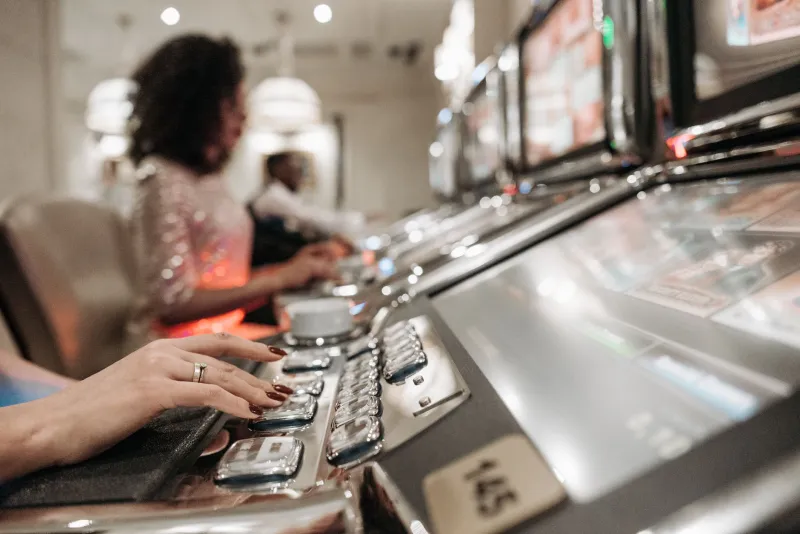
If you've ever been mid-spin at your local RSL and suddenly found yourself staring at a dark screen with a countdown timer, you've met one of Australia's more quietly controversial harm-reduction tools: the mandatory machine break. It sounds simple enough — pokies switch off for a few minutes every hour, giving players a chance to breathe, reconsider, and maybe head home. But the reality is messier, more complicated, and honestly, a lot more interesting than that.
We've been poking around the rules, talking to players, and looking at what the research actually says. Here's the full picture.
What the Rules Actually Say (State by State)
Australia doesn't have a single national standard for gaming machine breaks, which means the rules vary a fair bit depending on where you're sitting.
New South Wales requires gaming machines in clubs and pubs to have a mandatory 'break-in-play' feature — machines must stop for a minimum of 30 seconds after a maximum of 60 minutes of continuous play. That's the baseline, though individual venues can tighten it up.
Victoria takes a slightly different approach. Machines must display a 'take a break' prompt and, under electronic monitoring requirements, venues are supposed to track play patterns. But the actual hard stop isn't always as rigid.
Queensland has similar provisions baked into its Gaming Machine Act, with mandated player activity statements and session reminders. The Northern Territory and South Australia have their own frameworks, though enforcement capacity varies significantly.
The patchwork nature of these rules is one of the first problems. A punter who crosses from NSW into the ACT might find themselves playing under completely different conditions without realising it.
The Science Behind Why a Break Should Help
Here's the thing — the concept isn't just bureaucratic box-ticking. There's legitimate psychology behind it.
Gambling, particularly on pokies, is designed to create what researchers call a 'dissociative state' — you get absorbed, time warps, and your decision-making quietly goes offline. Studies from institutions including the University of Sydney and the Australian Gambling Research Centre have found that continuous play significantly reduces a person's ability to make rational financial decisions. The longer you sit, the harder it becomes to stop voluntarily.
A forced interruption — even a short one — can break that trance. It's the same reason casinos don't have clocks on the walls. When you snap back to reality, you're more likely to assess how long you've been there and how much you've spent.
Research published in the International Journal of Mental Health and Addiction found that mandatory breaks, when properly implemented, did reduce session lengths and spend amounts among moderate-risk gamblers. The keyword there, though, is 'properly implemented.'
What Players Are Actually Doing During the Break
We spoke to a handful of regular pokie players — people who visit their local club once or twice a week — and the answers about what they do during machine breaks were illuminating.
One bloke from Western Sydney told us he uses the break to grab a beer. Another said she just moves to a different machine. A third admitted he'd never really noticed the break kicking in because he tends to take a toilet stop around the same time anyway.
That last response is telling. For players who are deeply in a session, the break doesn't necessarily prompt reflection — it prompts workarounds. Moving to a neighbouring machine that's still active. Waiting out the 30 seconds on autopilot. Using the pause to top up their drink, which, as we've written about before, creates its own set of problems.
The break works best as an intervention when the player is already on the fence — when they're tired, or their budget is almost gone, and they just need an external nudge to stop. For someone in the grip of a serious session, 30 seconds of darkness isn't always enough.
Where Venues Are Dropping the Ball
Let's be honest: not every venue is implementing these rules in the spirit they were intended.
Some clubs have been found to configure machines in ways that technically comply with the letter of the law while undermining its intent. A 30-second break is the minimum — but venues aren't rushing to extend it. Player information displays, which are supposed to show spending and session time, are sometimes positioned in ways that make them easy to ignore.
There's also the issue of staff culture. Responsible gambling training is mandatory in most states, but the reality inside a busy club on a Friday night is that a floor attendant isn't always watching for signs of extended play. And when machines reset the session clock if a player inserts a new note or loyalty card, the 'continuous play' timer can effectively be gamed by the machine itself.
A 2022 audit in Victoria found several venues where the technical monitoring systems weren't functioning correctly — meaning the mandatory break triggers simply weren't firing as required. Regulators issued notices, but the lag between non-compliance and enforcement is a persistent problem across the country.
The Punters Who've Learned to Beat the System
It'd be naive to think problem gamblers aren't adaptable. Some experienced players have figured out exactly how to sidestep break requirements without breaking any rules themselves.
The most common tactic is machine-hopping — moving to an adjacent machine when one goes into break mode. In a large gaming room with dozens of machines cycling at different intervals, there's almost always one available. Unless a venue has genuinely staggered its break schedules across machines, a determined player can keep going indefinitely.
Some players also use loyalty cards strategically, cashing out and re-inserting to reset timers. It's not illegal. It's just a loophole that the rules haven't fully closed.
What Actually Works — And What Needs to Change
Researchers and harm-reduction advocates broadly agree that mandatory breaks are a useful tool, but not a silver bullet. The most effective interventions pair breaks with other features: spending limit alerts, session time notifications, and — crucially — pre-commitment options that let players set hard limits before they start.
NSW's implementation of the cashless gaming card trial is worth watching in this context. If players have to set a budget before they start, the break becomes less about stopping them mid-session and more about giving them a moment to check whether they're on track.
There's also a strong case for longer, more meaningful breaks — some researchers argue that a five-minute pause every 45 minutes would be significantly more effective than the current standard. Whether venues would accept that is another question entirely.
The Bottom Line for Aussie Players
If you're a casual player who enjoys a session at the club, mandatory breaks are actually on your side — even if they're a bit annoying in the moment. Use them. Step away from the machine, check your spend, get some water instead of another schooner, and ask yourself honestly whether you're still having fun or just chasing.
If you're finding that you're actively trying to avoid or work around the breaks, that's worth paying attention to. That impulse — the frustration at being interrupted — is one of the early signals that a hobby might be becoming something else.
For the system to work properly, though, it needs better enforcement, tighter loopholes, and venues that genuinely buy into the intent rather than just ticking the compliance box. The breaks are a good idea. We just need to make sure they're actually breaking something.
If gambling is causing you stress, the National Gambling Helpline is available 24/7 on 1800 858 858. You can also visit gamblinghelponline.org.au for free, confidential support.